Moist Banana Bread Recipe
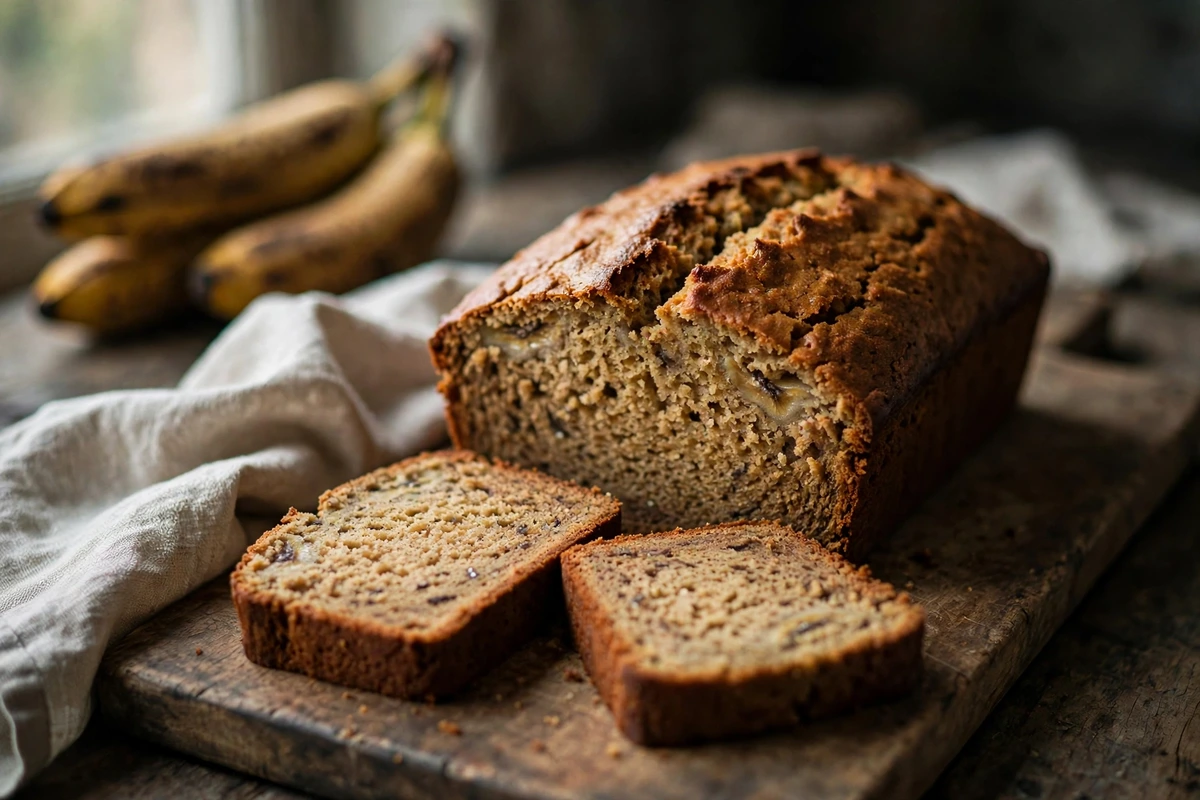
The difference between a loaf that stays soft for four days and one that turns into a dry brick is mostly the bananas. Not yellow. Not speckled. Black, soft enough that the peel splits when you pick it up. This banana bread uses three of them, melted butter instead of creamed, and one bowl, and it bakes up with a crackly split down the top and a close, tender crumb that gets better overnight.
Why You'll Love This Recipe
- One bowl and a whisk. No mixer, no creaming stage, no waiting for butter to soften.
- Uses up bananas you were about to throw out, and the uglier they are the better it works.
- Stays genuinely moist on day three, which most loaves do not.
- Freezes in slices, so you can pull out one piece for breakfast instead of committing to a whole loaf.
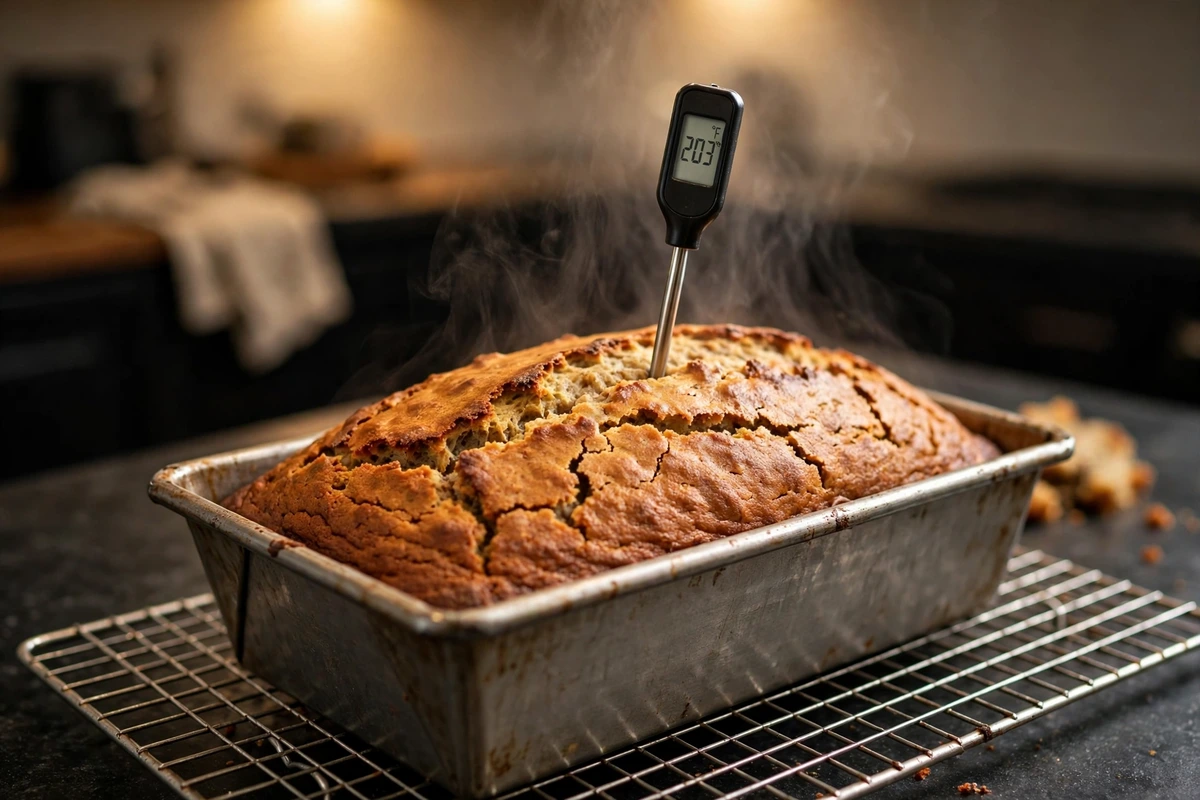
Here's the one thing nobody tells you: the toothpick test lies on this loaf. Melted banana forms wet pockets that coat a skewer and read as "raw" when the bread is done, or a pocket of set batter reads "clean" when the middle is still wet. Use an instant-read thermometer instead and pull the loaf at 205 to 210°F (96 to 99°C) in the center. That number is the same whether your oven runs hot, your pan is dark metal, or your bananas were extra juicy, which is why it works when time-based baking doesn't.
Read Before You Start
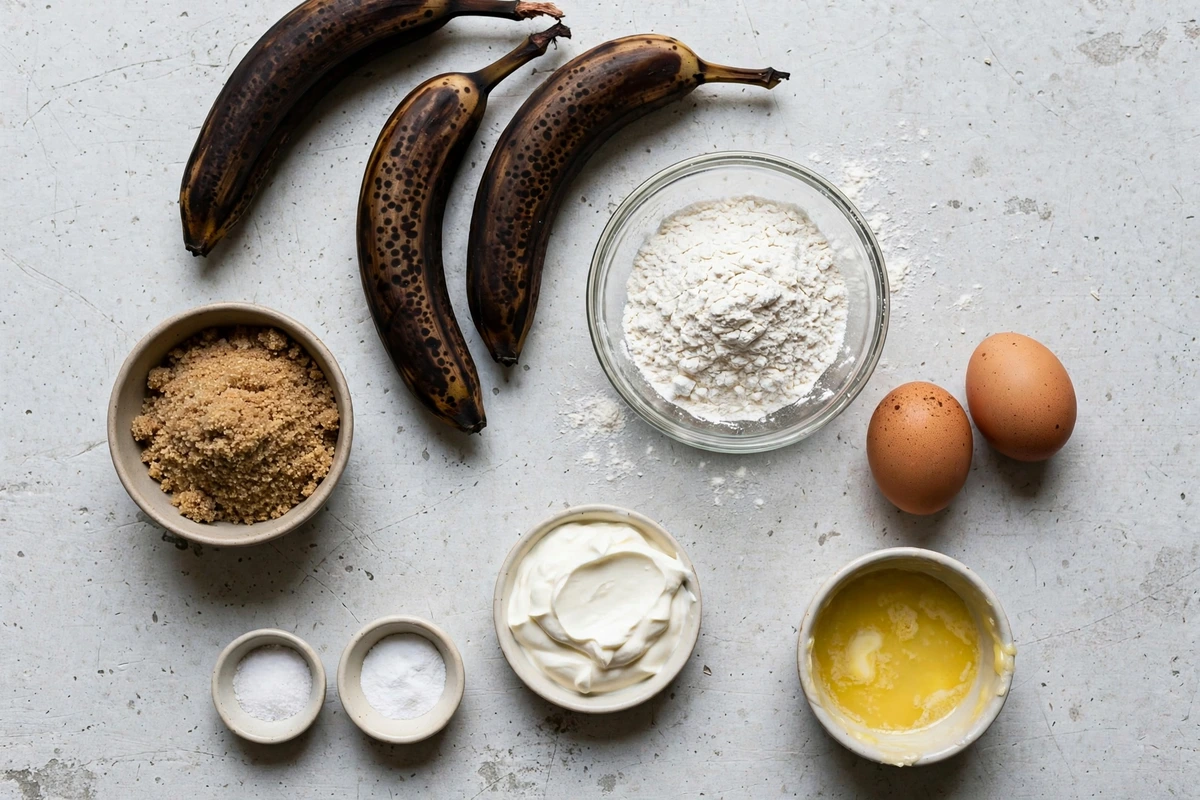
Measure the mashed banana, don't count bananas. A small banana and a large one can differ by 60g of fruit, which is the single biggest reason two people follow the same recipe and get different loaves. You want 1 1/4 cups mashed, about 300g. Too much banana and the center stays wet and sinks no matter how long you bake.
Stop mixing the second the flour streaks disappear. Once flour meets liquid, gluten starts building. Twenty extra strokes gives you a rubbery loaf with long tunnels running through it. Underdone mixing is recoverable. Overmixed batter is not.
Ingredient Deep Dive & Notes
Very ripe bananas. Starch converts to sugar as bananas ripen, so black bananas are sweeter, softer, and more aromatic than yellow ones. Yellow bananas will technically bake, but the loaf tastes flat and needs more sugar to compensate. If yours aren't there yet, bake them unpeeled at 300°F for 15 to 20 minutes until the skins blacken, then cool and use.
Melted butter, not softened. Creaming softened butter whips air into the batter and gives you a lighter, cakier crumb. Melted butter coats the flour instead, which is what makes this loaf dense in the good way and keeps it moist longer.
Light brown sugar. Don't substitute white sugar here. The molasses in brown sugar holds onto water, which is a real part of why the loaf stays soft on day three, and it deepens the color of the crust.
Sour cream or full-fat plain yogurt. Adds fat and acid. The acid reacts with the baking soda for lift and tenderizes the crumb. Buttermilk works at the same volume if that's what you have.
Baking soda, not baking powder. There's plenty of acid in this batter between the banana, brown sugar, and sour cream, so soda is the correct leavener. Swapping in powder gives you a pale, slightly bitter loaf.
Vanilla extract. Standard extract is alcohol-based. Alcohol-free vanilla flavoring or 1 teaspoon of vanilla powder both work as a straight swap if you'd rather avoid it.
Two loaves that pair well with this one once you're baking in batches: [Related recipe: Chocolate Chip Banana Bread, link once published] and [Related recipe: Healthy Banana Bread, link once published].
Equipment Needed
- 9x5-inch loaf pan. An 8.5x4.5 pan works but the batter sits deeper, so add 8 to 12 minutes and tent the top with foil earlier.
- Instant-read thermometer. The one piece of gear that makes this recipe repeatable.
- Parchment paper. Cut a strip the width of the pan and let it hang over both long sides as a sling. Lifting the loaf out beats flipping a hot, soft loaf upside down.
Detailed Step-by-Step Cooking Guide
Preparation & Setup
1. Heat the oven and line the pan
2. Mash the bananas completely
3. Whisk the wet ingredients
4. Whisk the dry ingredients separately
5. Fold, don't stir
6. Bake
7. Cool in two stages
Kitchen Process & Plating Gallery
Getting the Banana Bread Texture Right
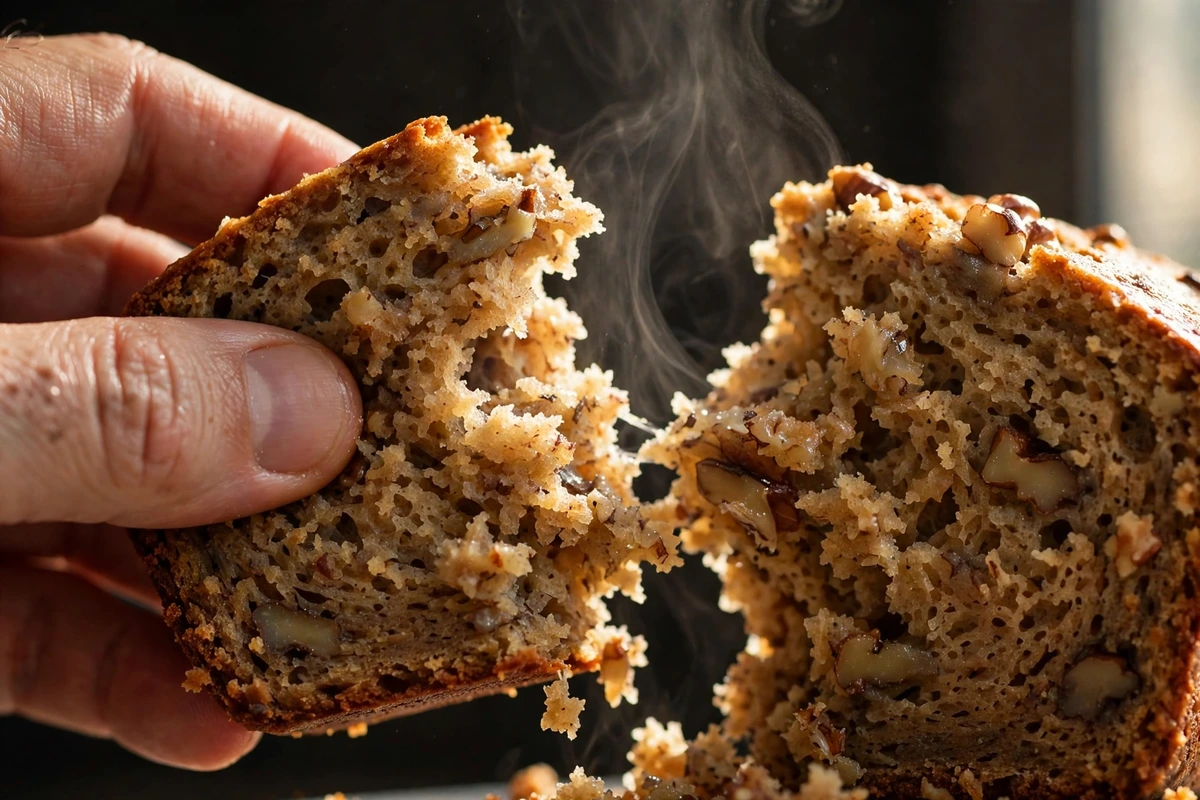
Done right, the top has a matte, deeply browned crust with a split running lengthwise, and the crumb underneath is tight and even with a slight sheen. A slice should hold together when you pick it up but bend a little before it breaks.
Almost always too much banana or underbaking. Measure the mash next time and go by internal temperature.
The loaf rose, then collapsed. Usually the oven door opened before the structure set, or the batter was too wet. Wait until at least the 45-minute mark before checking anything.
Overbaked, or too much flour from scooping the measuring cup directly into the bag, which compacts it. Spoon flour into the cup and level it, or weigh it.
Overmixed after the flour went in. Nothing to do about this loaf, but it's an easy fix on the next one.
Oven runs hot, or the pan is dark metal. Drop to 335°F and add 10 minutes.
How to Use Leftover Banana Bread
How to Serve, Store & Reheat
Slice about 3/4 inch thick, at room temperature or barely warm. Salted butter is the standard. Cream cheese with a scrape of honey is better.
Cool completely, then wrap in foil or plastic and keep at room temperature for up to 4 days. Do not refrigerate. The fridge accelerates starch retrogradation, which is the technical way of saying it goes stale faster in there than on your counter.
15 seconds in the microwave for a slice, or 5 minutes in a 300°F oven for a larger piece. Toasting works too and is better if the loaf is past day two.
Yes, and it freezes very well. Slice first, wrap slices individually, then bag them. Up to 3 months. Thaw at room temperature for 30 minutes or toast straight from frozen. A whole loaf freezes fine too but forces you to defrost all of it at once.
Dietary Variations & Adaptations
Swap in a 1:1 gluten-free baking blend that contains xanthan gum, gram for gram. Let the batter sit in the pan for 20 minutes before baking so the starches hydrate, otherwise the crumb comes out sandy. Expect a slightly shorter, denser loaf.
Replace the butter with an equal weight of melted refined coconut oil or a firm vegan butter block, and the sour cream with unsweetened coconut yogurt. The crumb comes out a touch softer, so give it the full 15 minutes in the pan before lifting.
Use 2 flax eggs (2 tablespoons ground flaxseed whisked with 6 tablespoons water, rested 10 minutes). The loaf will be noticeably denser and needs about 5 extra minutes. Temp it, don't guess.
“A note from the kitchen: this loaf is better on day two, and that isn't sentiment. Overnight, moisture redistributes from the wetter center toward the drier crust, the crumb firms into clean slices instead of tearing, and the banana flavor reads rounder because the aromatics have had time to settle. So wrap it while it's still barely warm, which traps just enough steam to soften the crust, and if you can stand it, cut the first slice tomorrow. Recipe Timing Prep Time: 15 minutes Cook Time: 60 minutes Rest Time: 45 minutes (15 minutes in the pan, 30 minutes on the rack) Total Time: 2 hours <a id="recipe-card"></a>”
Allergen Notice: This recipe contains dairy (butter, sour cream), eggs, and gluten (all-purpose flour). Substitutions are listed above: dairy-free butter and coconut yogurt for dairy, flax eggs for eggs, and a 1:1 gluten-free blend for the flour. If you're cooking for someone with a diagnosed allergy, check every label yourself, including flour blends and vanilla, and be aware of cross-contact in your own kitchen. Nothing here is a guarantee that the recipe is safe for a specific allergy.
Frequently Asked Questions
Recipe Card & Steps
Ingredients Checklist
Click an item to check it off as you prep
- 1 (300g) mashed very ripe banana, about 3 medium
- 1 (113g) unsalted butter, melted and slightly cooled
- 3 (150g) light brown sugar, packed
- 2 large eggs, room temperature
- 1 (60g) sour cream or full-fat plain yogurt
- 2 vanilla extract
- 1 (220g) all-purpose flour, spooned and leveled
- 1 baking soda
- 1 fine salt
- 1 ground cinnamon
Step-by-Step Instructions
Follow along and mark each step complete as you cook
Heat the oven to 350°F (175°C) with a rack in the center. Grease a 9x5-inch loaf pan and line it with a parchment sling that overhangs both long sides.
Mash the bananas until completely smooth with no lumps larger than a pea. Measure out 1 1/4 cups (300g).
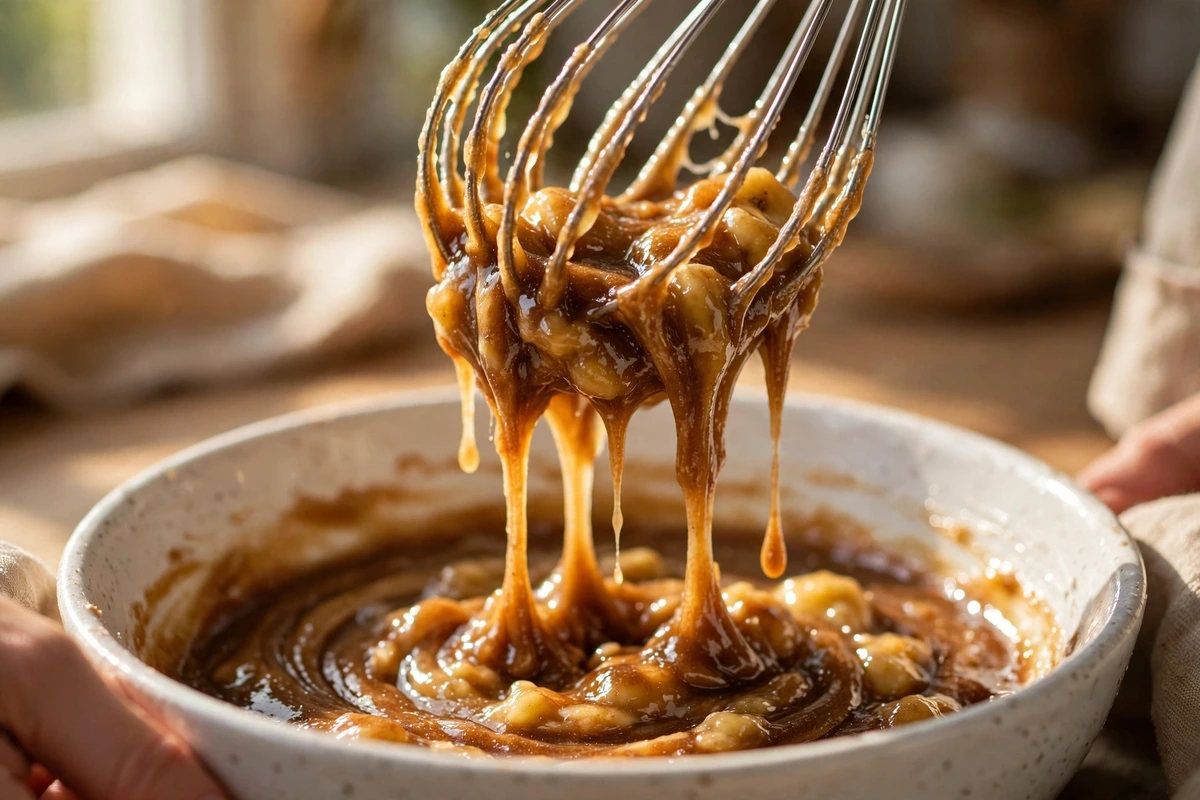
Whisk the melted butter and brown sugar together for about 30 seconds, until glossy.
Whisk in the eggs one at a time, then the sour cream, vanilla, and mashed banana until fully combined.
In a separate bowl, whisk the flour, baking soda, salt, and cinnamon together for 15 seconds.
Fold the dry mixture into the wet in two additions. Stop as soon as the last flour streak disappears. The batter will look thick and slightly lumpy.
Scrape into the prepared pan and level the top. Bake 55 to 65 minutes, tenting with foil at 40 minutes if the top is already deep brown.
Pull the loaf when the center reads 205 to 210°F (96 to 99°C) on an instant-read thermometer.
Cool in the pan 15 minutes, then lift out by the parchment and cool on a wire rack at least 30 minutes before slicing.
Recipe Card Notes & Tips
You Might Also Enjoy
More delicious kitchen-tested dishes in Desserts.